How GSM and Width Affect Cotton Wax Fabric Orders
When African fabric importers, wholesalers, distributors and garment buyers compare Cotton Wax products, color and pattern usually attract attention first.
When African fabric importers, wholesalers, distributors and garment buyers compare Cotton Wax products, color and pattern usually attract attention first. GSM and fabric width deserve equal attention: they help define the material being quoted, the area received for an ordered length, and how the fabric may fit a cutting or resale program.
GSM and width should not be guessed from a photograph. They also should not be copied from one product and applied automatically to every African wax textile. The safest process is to identify the exact product, request its confirmed specification, and keep that information with the quotation and sample record.
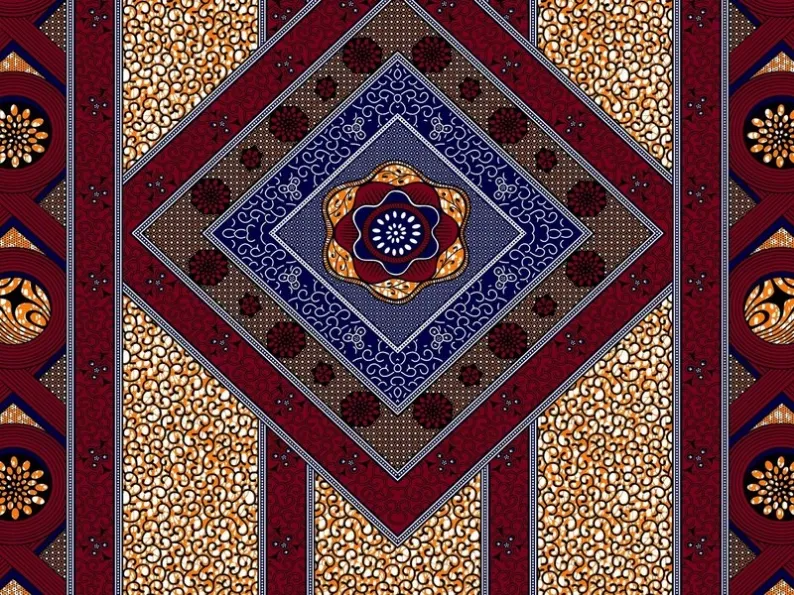
This design, Product ID29, has a confirmed specification of 100% cotton, 135gsm and 46–47 inch width. These figures apply to this product, not every wax print.
1. What does GSM mean in a fabric inquiry?
GSM means grams per square metre: fabric mass for a given area. For the same area, a higher GSM means more fabric mass. This matters when buyers describe the fabric they need and plan order weight, but GSM alone does not establish garment suitability, durability, colorfastness or price.
Two fabrics can share a GSM figure and still differ in material, construction, finish, print, or handling. Conversely, a buyer should not assume that two visually similar wax prints have the same GSM. A website image can show the motif and visible colors, but it cannot verify mass per square metre.
For a specific example, Product ID27 and Product ID29 have confirmed specifications of 100% cotton and 135gsm. Buyers may reference those figures for those products, but should not apply them automatically to another design or a custom order.
2. Why does width matter to wholesale buyers?
Fabric width describes the crosswise dimension of the material. Two ordered lengths can contain different areas if their widths differ. For distributors, width should also remain consistent across quotations, labels and customer descriptions.
Usable area per running metre
Gross fabric area equals length multiplied by width, using the same measurement unit for both. For each running metre, the gross area in square metres is numerically equal to the width expressed in metres. Excluding selvedges can reduce usable cutting width; motif placement affects how efficiently that area is used. Ask whether the quoted width is full width or usable cutting width.
The confirmed width for Product ID27 and Product ID29 is 46–47 inches. Confirm the measurement basis and any required tolerance for the selected product; this article does not assign an unverified usable width.
Cutting efficiency and final cost
A cutting layout must accommodate garment sizes, seam allowances, motif scale and pattern matching. A wider fabric does not guarantee a particular garment yield. Test the intended layout before converting an order length into an expected number of garments.
A lower price per running metre is not necessarily a lower cost per usable area or finished garment. Compare the same composition, GSM, confirmed usable width, quantity and packing basis, then consider the actual cutting requirement. No price or saving can be calculated from a width label alone.
3. Read GSM, width, material and packing as a set
GSM and width become more useful when they are connected to the correct material, design reference, and packing information. A specification line that says only “135gsm” can become separated from the product it was meant to describe. A stronger record identifies the product URL or code, confirmed material, GSM, width, printing or finish description when available, and packing reference.
For the two Cotton Wax examples above, the confirmed specifications are 100% cotton, 135gsm, 46–47 inch width, two-side printing and 6-yard packing. Buyers should confirm which specifications and commercial terms apply to their actual order.
Packing length and fabric width are different measurements. A 6-yard reference describes length, not width or MOQ. For order planning, confirm the required length per design and number of packs, then use the agreed width to assess area. Convert mixed units before calculating. Packing options vary by product and order requirement. See the African wax fabric packing guide for the separate packing questions.
4. Use the specifications during sample approval
When a sample arrives, connect it to the same product code and formal URL used in the inquiry. Check that the written material, GSM, width, packing reference, and any confirmed printing or finish description belong to that sample. Do not approve a sample only because its pattern resembles the selected website image.
Record the measured width using an agreed method. If GSM verification is required, agree the test method and sampling procedure before approval. A photograph cannot substitute for either measurement, and a sample discussion is not a certified test result.
A garment buyer can use a trial layout to check width and motif placement; a wholesaler can compare the specification records across an assortment. Record what has been measured and what still needs confirmation, rather than assuming identical performance from matching GSM figures.
5. Compare products without creating false equivalence
When building a comparison table, keep each product on its own row. Include the formal URL, material, GSM, width, packing, design reference, sample status, and open questions. If a field is unknown, mark it as requiring confirmation rather than copying a value from a similar product.
Cotton and polyester are not interchangeable simply because their prints look similar. When choosing a supplier for your fabric requirements, ask for a product-specific specification rather than relying on a category label.
Use the African print wax category to shortlist designs. When preparing a product-specific quotation request, keep the GSM and width comparison tied to each exact product.
6. What to include in a GSM and width inquiry
“Cotton wax fabric” does not identify a quotation-ready specification. The supplier needs composition, GSM and width to identify the requested fabric, and quantity and design details to establish the scope of the quotation. Without them, two replies may concern different products rather than different prices for the same requirement. Include:
- the formal product URL or product code;
- the confirmed or requested material;
- the GSM and width to be confirmed;
- the intended use and any cutting constraints;
- the selected design, color requirement or required assortment;
- the quantity per design and total requested quantity;
- packing and labeling questions;
- destination country;
- whether a sample and specification confirmation are required;
- open questions about availability, price, MOQ, lead time, or customization.
Keep requested specifications separate from confirmed specifications. If a buyer asks whether another GSM, width, material, or custom design can be discussed, that request does not mean the option is already available. The supplier should confirm feasibility and commercial details for the actual inquiry.
MOQ can be confirmed according to the selected design and order requirements. Ask for price and lead time for that same specification and quantity, rather than treating the packing length as a commercial offer.
Make specifications traceable before ordering
GSM and width connect the selected fabric to area, cutting plans and a comparable quotation. Keep both figures attached to the exact design, sample and order requirement. Neither number alone guarantees quality, garment yield or a particular price.