How to Find the Right African Wax Fabric Supplier for Your Market
Choosing an African wax fabric supplier is not only a matter of finding an attractive print.
Choosing an African wax fabric supplier is not only a matter of finding an attractive print. Importers, wholesalers, distributors, fabric retailers, and garment manufacturers need a supply partner whose product information, design references, communication, and order confirmation process fit the way their market operates. A supplier may show many colorful designs, but a buyer still needs to establish exactly what is being offered and how each selection will be documented.
A practical evaluation therefore starts before price comparison. Buyers should define their market, examine product records, test communication with a focused inquiry, and keep every sample and quotation tied to an exact design. The following framework helps purchasing teams compare suppliers without assuming that one product specification or commercial term applies to an entire collection.
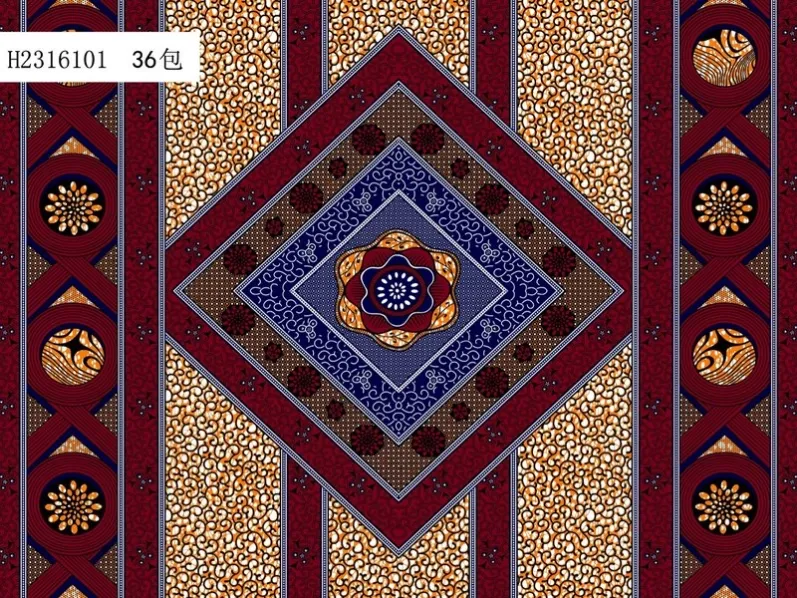
A published Cotton Wax design with a formal product reference: Product ID29. Use the page and design reference to keep product discussions traceable.
1. Start with your own market requirements
The right supplier for one buyer may not be the right supplier for another. A fabric retailer building a varied in-store assortment has different priorities from a garment manufacturer planning a coordinated production run. Before contacting suppliers, write a short buying brief that covers the target customer, intended use, preferred material direction, design mix, quantity structure, packing questions, destination country, and required decision date.
Separate confirmed requirements from preferences. If cotton is mandatory, state that clearly. If floral and geometric prints are both under consideration, list them as assortment options. If weight, width, packing, or a custom design is only a request, label it as a point for confirmation. This prevents a supplier from treating a general preference as a final specification and gives your team a consistent basis for comparison.
The African print wax category can be used to review published products and collect formal URLs before an inquiry. Save those URLs in the buying brief instead of relying on screenshots or informal descriptions such as “the blue one.”
2. Look for product records, not just image galleries
Images are useful for identifying visible colors and motifs, but they cannot confirm fiber content, GSM, width, printing method, finish, packing, availability, or performance. A credible sourcing discussion should connect each image to a product code, design reference, or formal page. Ask the supplier to confirm the material and other relevant specifications in writing for every shortlisted design.
Published product pages also make assortment comparison more controlled. For example, Product ID28 records an orange-and-pink floral Cotton Wax design, while Product ID29 records a burgundy-and-navy geometric design. These are distinct product references rather than evidence that every design shares the same availability or commercial terms. When reviewing a product page or quotation, check the fabric composition, GSM, width, and whether the packing is confirmed as 6 yards for that specific design.
Create a comparison sheet with one row per product. Useful columns include the formal URL, design reference, material, specifications that matter to your use, sample status, requested quantity, and open questions. Leave unknown fields open for confirmation. Do not fill them by copying details from a visually similar print.
3. Evaluate assortment fit and design traceability
For wholesale programs, assortment fit is often as important as an individual design. Review whether the supplier can discuss a balanced group for your market rather than only a single attractive print. Consider how designs can be grouped by material, color direction, price position, and intended use. If each design has a clear record, the assortment can be compared and reordered with less uncertainty.
Traceability matters when several people approve the order. Purchasing, merchandising, sales, and retail teams may each need to see the confirmed material, design reference, and order terms. Keep the product URL and specification record in the same file as the sales or production plan, so later decisions stay connected to the confirmed record.
Buyers that are still deciding between fiber directions can use the cotton versus polyester wholesale guide to structure that comparison. Material choice should be settled from confirmed records and the buyer’s intended use, not from pattern appearance.
4. Test the supplier with a complete inquiry
A supplier’s first response can reveal how clearly the order will be managed. Send a structured inquiry rather than asking only for “wholesale price.” Include your company type, destination country, intended use, selected product URLs or design references, fabric composition requirement, GSM and width questions, quantity per design, total requested quantity, 6 yards packing questions, MOQ confirmation, expected production lead time, and whether samples are needed. Ask the supplier to identify which facts are confirmed and which still require checking.
Price, MOQ, lead time, current availability, and customization should be confirmed for the actual inquiry. For repeat purchasing, the correct packing description is important: packed pieces are counted in 6-yard lengths, while 600-yard bales group 100 pieces. A collection of different designs should not be assumed to convert into a ready-to-ship bale without a written confirmation.
The wholesale product-selection guide provides a broader checklist for organizing material, design, intended use, and order questions. For yardage and packing terminology, the African wax fabric packing guide explains why a length reference is not automatically an MOQ or complete shipping specification.
5. Use samples as a controlled verification step
When a sample is available, review it against the exact written record. Confirm that the design reference, material, GSM, width, printing description, and packing reference match the product you intended to order. If a characteristic cannot be verified from the sample, record it as a point for written confirmation before placing an order.
Keep a dated approval note for each sample. Include the product reference, the person who approved it, and the exact specification that was confirmed. This note is especially useful for design variants that look similar in photographs or for programs that will be reordered.
6. Check how repeat and custom requests are handled
Repeat purchasing depends on accurate identification and renewed confirmation. Ask how the supplier identifies a repeat design, whether the same material and specification can be confirmed for the new order, and whether the order quantity or packing can be adjusted without a new sourcing process.
Custom design requests need a separate scope. Clarify the requested material, artwork or motif direction, color range, quantity, sample expectation, and any packaging requirement. Establish whether a custom request changes the commercial terms, MOQ, lead time, or quotation process, and record those terms in writing.
7. Compare the full buying process, not one headline number
After receiving responses, compare suppliers on documentation quality, product traceability, communication clarity, sample discipline and order confirmation. A supplier who provides a low price but cannot identify products or confirm specifications is a different option from a supplier whose quotation is aligned with a documented specification and a confirmed order basis.
The strongest supplier evaluation produces a clear next action: reject an unsuitable option, request missing confirmation, approve a sample stage, or proceed to a product-specific quotation. It should never depend on invented specifications or assumptions drawn from images.
ShareH Textile / AfricanPrintWax can support buyer discussions around available designs, confirmed product records, sample questions and quotation requirements without turning an early inquiry into an unsupported promise.