How to Request an Accurate Cotton Wax Fabric Quotation
A buyer who finds an African wax print online may begin with a simple question: “How much is this print?”
A buyer who finds an African wax print online may begin with a simple question: “How much is this print?” For a wholesale order, however, a useful quotation needs more than a picture. The supplier must be able to identify the exact product, understand the requested quantity and packing, and confirm which commercial details apply to that inquiry.
This guide explains how importers, wholesalers, distributors, fabric retailers, and garment manufacturers can prepare a clearer cotton wax fabric quotation request. It does not publish a fixed price, minimum order quantity, or lead time. Those points must be confirmed for the selected design and the actual order requirements.
When requesting a quotation for a design such as Product ID28, a buyer should first be able to identify the product by its page, design reference, material, and intended use. A clear quotation request is an inquiry about that product, not a general question about a pattern seen in an image.
1. Identify the exact product and design
Start with the formal product URL, product code, or design reference. A description such as “blue floral print” or “African print” is not enough, because another buyer may use the same words for a different design. A product reference that cannot be traced to an exact design can produce a quotation that does not match the intended fabric.
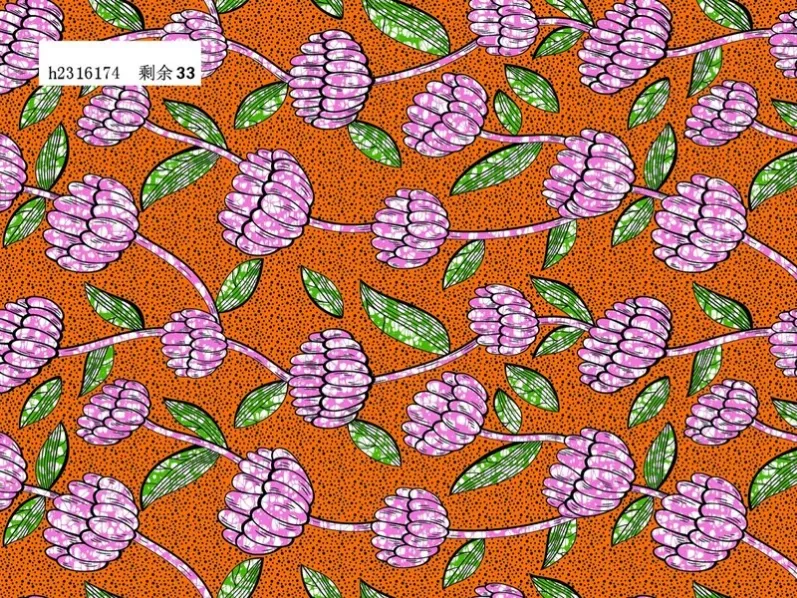
The African print wax category gives buyers a place to compare published designs. For example, Product ID27 is a black-and-green fan-like design, Product ID28 is an orange-and-pink floral design, and Product ID30 is a royal-blue floral-geometric design. Sharing one of these formal URLs makes the starting point unambiguous.
If the buyer wants several designs, list each URL on a separate line. If a different colorway or custom design is required, label it as a request rather than assuming it is already available.
2. State the material and intended use
Confirm the material being requested instead of asking for “wax fabric” as a broad category. The published products linked above have product-specific records confirming 100% cotton wax. A buyer comparing cotton with another material should say so clearly, because the correct product and quotation basis may be different.
Also state the intended use: garment production, fabric wholesale, retail distribution, or another defined program. Intended use does not replace technical specifications, but it helps organize the discussion. A garment manufacturer may need to review motif placement and cutting requirements, while a distributor may focus on assortment balance and how many designs are needed.
For a broader material comparison, buyers can read Cotton vs Polyester African Wax Print Fabric: A Wholesale Buyer’s Guide. The final quotation request should still name the exact selected product and confirmed material.
3. Provide a quantity breakdown, not only a total
Quantity should be written in a way that both sides can verify. State the requested amount for each design or colorway, the number of designs, and the total requested quantity. If the order is an assortment, a short table is clearer than one total followed by several images.
Do not interpret a product’s packing reference as a universal MOQ. The current published Cotton Wax examples linked in this article have product-specific records showing 6-yard packing, but that does not establish a fixed minimum order or a complete shipment configuration. MOQ and availability must be confirmed for the actual inquiry.
A useful quantity section might say: selected product URLs, requested quantity per design, number of designs, and total requested quantity. This structure lets the supplier check the request without guessing how the total should be divided.
4. Describe the packing information you need confirmed
Packing affects how buyers plan receiving, inventory, resale, and production. State whether the inquiry refers to a product’s listed length, the number of units, total yardage, or a requested presentation. If labels, folding, wrapping, or carton details matter, list them as questions for confirmation.
The guide African Wax Fabric Packing: 6 Yards, 12 Yards and 600 Yards Explained for Wholesale Buyers explains why a yardage label is not a complete packing specification. Use that distinction in the inquiry: identify what is already shown in the product record, then ask what applies to the proposed order.
Avoid copying packing assumptions from an earlier purchase or another product page. A quotation should reflect the selected product, quantity, and current order request.
5. Include the destination and order context
Give the destination country and, when relevant to the discussion, the destination city or port. This does not mean that one message will automatically produce a final shipping arrangement, but it prevents the quotation conversation from being separated from the actual market and delivery context.
Add any target timing as a request that needs confirmation. Do not assume availability or lead time from a product image or publication date. The current Cotton Wax records describe stock as dynamic and require current availability to be checked. If timing is important, ask the supplier to confirm current availability and the applicable schedule for the specific order.
Buyers should also identify whether the inquiry is for an initial selection, a sample discussion, a repeatable ready design, or a custom design conversation. These paths require different confirmations and should not be mixed into one vague price request.
6. Separate confirmed specifications from open questions
A clear inquiry distinguishes facts shown on the selected product record from points that still need a supplier response. For the published Cotton Wax products referenced here, the linked records confirm product-specific details including 100% cotton wax, two-side printing, 135gsm, 46–47 inch width, and 6-yard packing. Buyers should cite the exact product URL and ask whether those details apply to the quotation being prepared.
Price, MOQ, lead time, current stock, and order-specific packing should remain open questions until confirmed. Certification, colorfastness, production capacity, and other performance or supplier claims should not be inferred from a photograph or from a general article. If any of these points is important to the purchase decision, request the relevant confirmation or documentation directly.
This separation makes a quotation easier to compare later. It also reduces the risk that a buyer treats a general product description as a complete commercial offer.
7. Use a quotation checklist
Before sending the inquiry, check that it includes:
- the formal product URL, product code, or design reference;
- the required material and intended use;
- quantity per design and total requested quantity;
- the packing details that need confirmation;
- destination country and relevant delivery context;
- whether the request concerns available designs or custom design discussion;
- questions about current availability, price, MOQ, and lead time;
- any specification or documentation that must be confirmed before approval.
If several colleagues are involved, nominate one contact person and keep the same product references in email, messaging, quotation files, and purchase documents. Changing from URLs to unnamed screenshots midway through the discussion can reintroduce ambiguity.
Turn “How much is this print?” into a quotation-ready inquiry
A short price question is understandable, but a structured request is more likely to produce a relevant answer. When working with an African wax fabric supplier, the most important step is to connect the selected design with a clear quantity breakdown, packing questions, destination, intended use, and the commercial points that still require confirmation.